
Inspectable output
Product brief
Target user, use case, constraints, open questions and success criteria.
A product team had enclosure files and supplier interest, but needed a pre-tooling DFM review before committing to injection molding cost.
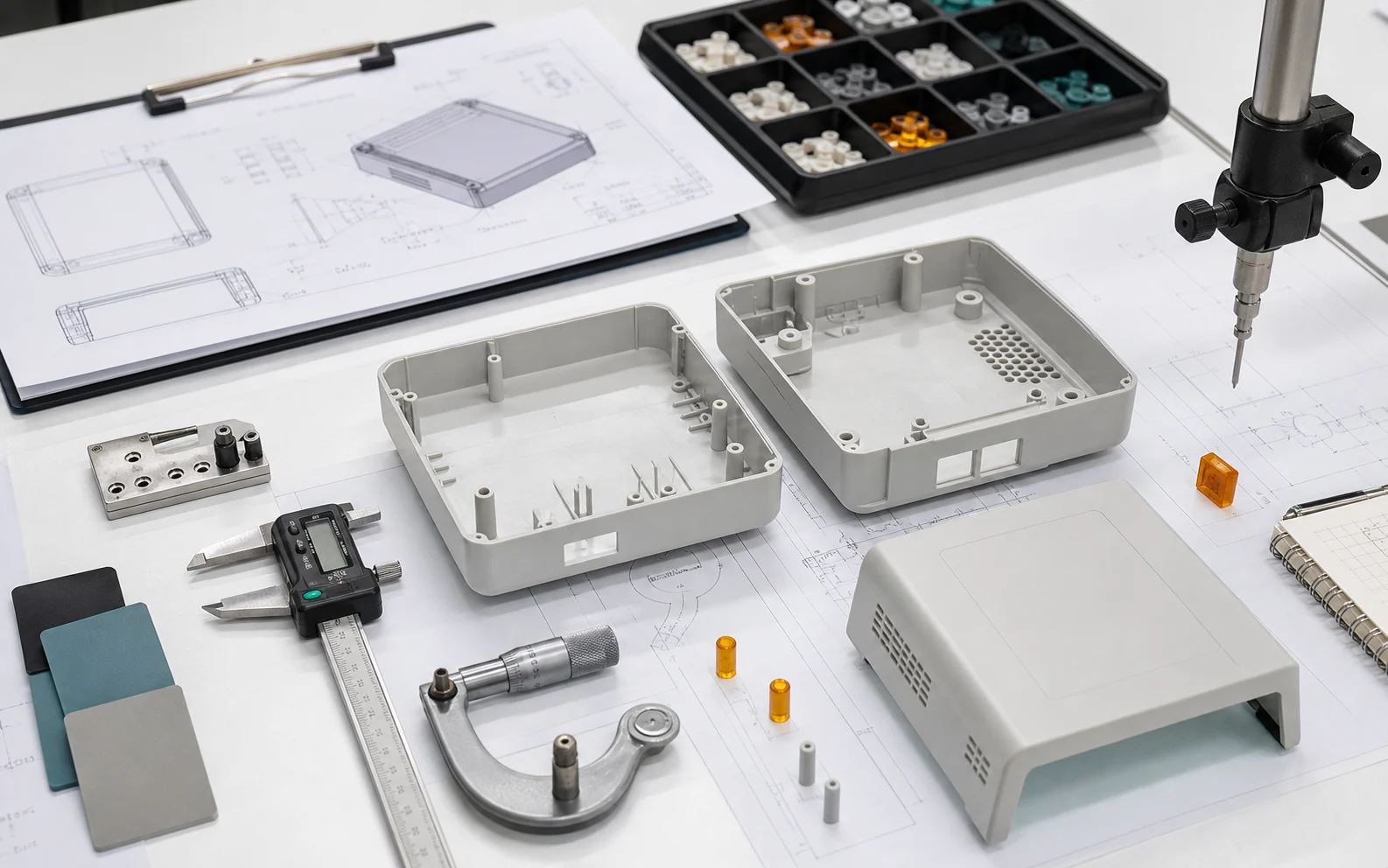
Each theme maps to a common American product-development decision: whether to fund engineering files, prototype, tooling, supplier sampling or pilot approval.
Tooling mistakes are expensive, slow and hard to recover from once a supplier starts mold work.
plastic enclosure DFM, injection molding design review, DFM before tooling.
Sink marks, weak bosses, impossible draft, ambiguous parting lines and unclear supplier quote assumptions.
Review enclosure files before paying for tooling or production samples.
A stronger case page helps buyers understand the decision path before they compare visuals.
| Case layer | What buyers can inspect | Why it matters |
|---|---|---|
| Challenge | The buyer had an enclosure design direction, early supplier feedback and concern about opening tooling too soon. | Clarifies why the buyer could not simply approve the next spend. |
| Risk | Wall thickness, ribs, bosses, draft, snap fits and parting lines could create tooling revisions or sample defects. | Shows the commercial or technical failure mode behind the project. |
| Approach | Review moldability, assembly logic and supplier quote assumptions before the next spend decision. | Explains how form, structure, prototype route and supplier questions were connected. |
| Evidence package | DFM notes for wall thickness, ribs, bosses, draft and shutoff risks. Exploded views that separate cosmetic surfaces from functional structure. | Makes the case more credible than a finished image alone. |
| Result | Identified tooling-risk areas before purchase order or deposit. Separated cosmetic intent from moldability and assembly requirements. | Helps similar buyers judge whether the same path fits their product stage. |
The buyer should be able to inspect more than a finished image: inputs, structure, prototype notes and production risks all matter.
Target user, use case, constraints, open questions and success criteria.

Structure, assembly intent, dimensions, exploded views and supplier-ready references.
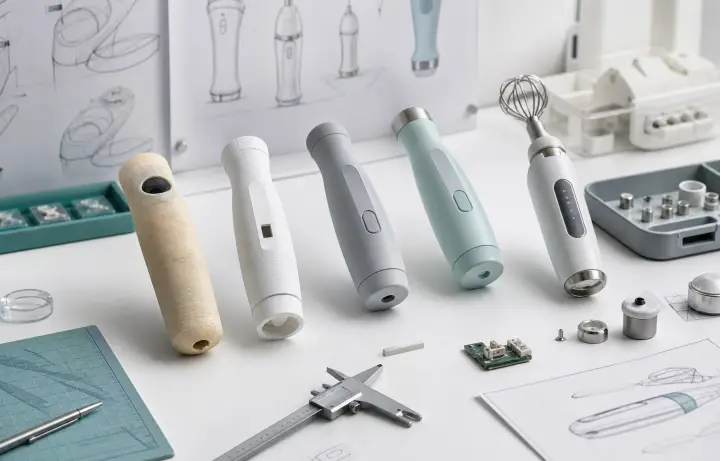
Sample method, inspection points, revision path and what the prototype must prove.
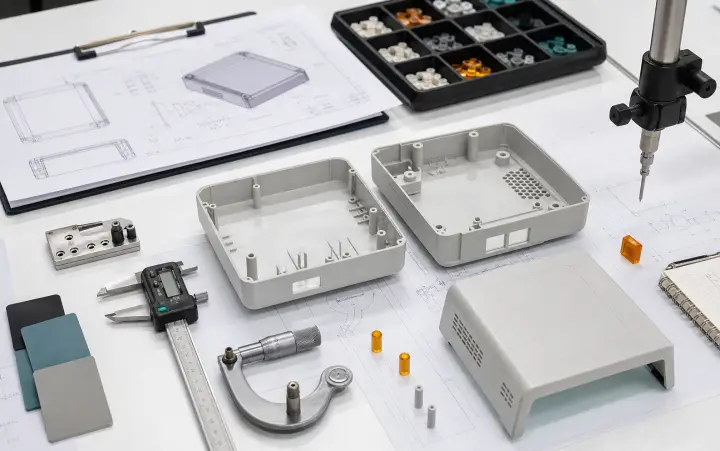
Wall, draft, material, tooling, supplier feedback and pilot approval notes.
A useful case explains the decision path, not only the final visual.
The buyer had an enclosure design direction, early supplier feedback and concern about opening tooling too soon.
Wall thickness, ribs, bosses, draft, snap fits and parting lines could create tooling revisions or sample defects.
Review moldability, assembly logic and supplier quote assumptions before the next spend decision.
V2 case pages separate inputs, evidence and approval gate so buyers can judge whether a similar engagement fits their stage.
Product goal, current files, target user, constraints, references and supplier or prototype context when available.
Form, structure, 3D files, prototype, DFM or supplier-review artifacts tied to the decision being made.
A practical next decision: fund engineering files, build prototype, revise before tooling, ask supplier questions or approve pilot conditions.
A premium industrial design case needs visual and technical proof across form, structure, prototype and manufacturing risk.
These anonymized outputs show the kind of evidence buyers should expect.
The first review gets faster when the buyer can share the few details that define the next risk.