
Project output
Product brief
Target user, use case, constraints, open questions and success criteria.
Templates and checklists for teams comparing industrial design, prototyping, DFM and production support before submitting a project.

The resource hub connects checklist content with the real materials teams usually need: briefs, files, prototype notes and supplier feedback.
Target user, use case, constraints, open questions and success criteria.

Structure, assembly intent, dimensions, exploded views and supplier-ready references.
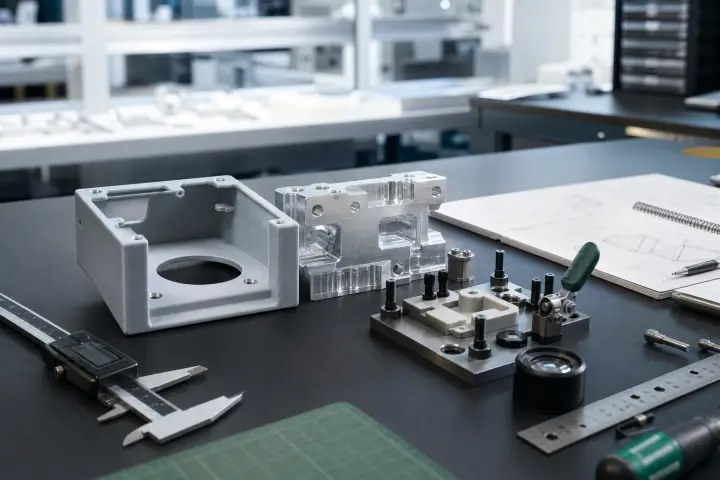
Sample method, inspection points, revision path and what the prototype must prove.
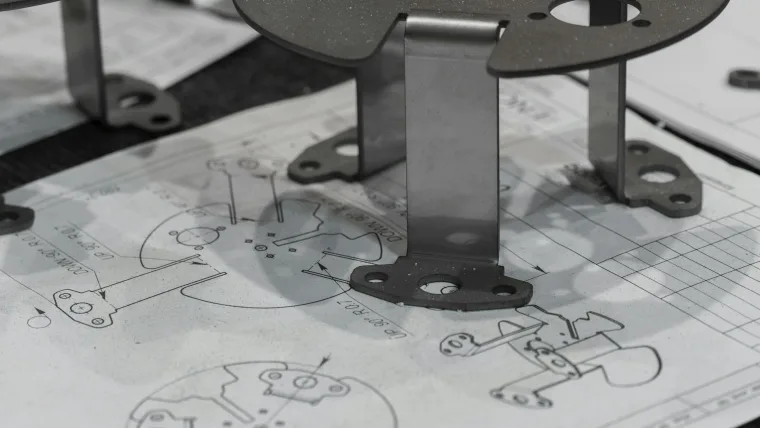
Wall, draft, material, tooling, supplier feedback and pilot approval notes.
These resources are built around what a serious hardware team needs before a first review: brief clarity, file status, prototype route, DFM risk and supplier sample feedback.
A practical intake checklist for product goal, users, constraints, current files and next development decision.
Prepare a better first reviewA pre-tooling checklist for draft, wall thickness, ribs, bosses, parting lines, materials and supplier quote assumptions.
Review files before toolingChoose whether the next sample should prove appearance, fit, ergonomics, function or production intent.
Plan the right sample routeWhat to include when sharing 3D models, drawings, exploded views, PCB outlines or supplier feedback.
Prepare files for reviewA practical approval checklist for finish, fit, ports, screw torque, packing, defects and revision control.
Review supplier samplesThese topics answer the questions that usually appear before a product review call.
A practical path from sketch and rough requirements to engineering files, prototype method, revision plan and supplier-ready files.
Understand where product form, user experience, CMF, mechanical structure and manufacturing responsibility overlap.
DFM checks whether a product design can be produced repeatedly at the target cost, quality and process route.
Know what a prototype can prove and what still needs to be confirmed before production approval.
The core details a design and prototyping team needs before estimating scope, risk, timeline and cost.
Cost depends on complexity, prototype method, engineering depth, tooling, testing, supplier coordination and revision cycles.
A practical checklist for enclosure wall thickness, ribs, bosses, vents, fasteners, ports, PCB clearance and CMF decisions.
Key design-for-manufacturing questions to resolve before injection molding quotes, tooling deposits or pilot samples.
A checklist for deciding whether a prototype, CAD package or product brief is ready for useful supplier quotes.
How to plan plastic enclosures around PCB layout, ports, vents, bosses, fasteners, CMF and injection molding risk.
A practical guide for connected device enclosures that need electronics fit, thermal paths, port access, antenna clearance and manufacturing logic.
What to check before tooling deposits, supplier quotes or pilot samples for plastic, metal and assembled hardware products.
How teams should choose between looks-like, works-like, engineering and production-intent prototypes before spending on samples.
How to connect industrial design, engineering files, prototype learning and supplier handoff before production decisions.
A practical checklist for reviewing supplier samples before approving pilot runs or early production.
Choose whether you should start with a concept review, prototype plan, DFM pass or supplier follow-through before you spend on the first stage.
A realistic 3-stage plan for teams that want to move from idea to validated hardware prototype without wasting budget.
How hardware teams can use manufacturer feedback to improve prototypes before tooling, pilot runs or supplier handoff.
A practical guide to tolerancing and GD&T basics for hardware teams sending drawings to manufacturers, with a pre-quote checklist.
A practical comparison of 3D printing, CNC machining and silicone (vacuum casting) molding for hardware prototypes, with a checklist for choosing the right route.
A practical comparison of ABS, polycarbonate and aluminum enclosures for consumer and industrial hardware, covering cost, durability, EMI shielding and manufacturing route.
A practical guide to NDAs for hardware teams sharing product designs with industrial designers, manufacturers or suppliers, including what a real NDA should cover and where a generic template falls short.
A practical overview of FCC, CE and UL certification for hardware teams, covering what each covers, when to start planning, and how certification requirements should influence enclosure and PCB design before tooling.
A checklist for evaluating industrial design and product development partners, covering the evidence that separates a manufacturing-ready design team from a portfolio-only studio.
Recognize the specific signals that mean iteration should stop and supplier engagement should start, before manufacturing spend increases the cost of a late design change.
A DFM report is a list of risks, not a list of required changes. Knowing which flagged items are hard blockers and which are tradeoffs the team can accept is what turns feedback into a decision.
Hiring in-house makes sense once design work is continuous and product-specific knowledge needs to stay inside the team; outsourcing usually wins for a single product cycle or when manufacturing-readiness skills are the actual gap.
Domestic manufacturing usually wins on communication speed and IP comfort at low volume; overseas manufacturing usually wins on unit cost and tooling access once volume justifies it, and the crossover point is a real number, not a general preference.
An NDA protects a conversation, but it does not protect the design itself. A design patent or provisional filing has its own strict timing rules, and getting the filing order wrong can quietly cost a founder the right to patent later.
Crowdfunding platforms require a working physical prototype, not a rendering, and knowing which prototype stage actually satisfies that bar (and what backers expect to see on launch day) avoids a scramble in the final weeks before the campaign goes live.
Industrial design covers the enclosure, the user interface and how the product is manufactured; PCB layout and firmware are a different discipline entirely, and a hardware product usually needs both to actually ship. Knowing where that line sits avoids either paying for overlap or discovering a gap late.
EVT, DVT and PVT are the three build gates most hardware teams use between a working prototype and mass production. Each one answers a different question, and the expensive mistakes happen when a team cuts production tooling before the question of the previous gate has actually been answered.
A consumer product is judged by people who never read a spec: they compare price on a shelf, drop it, return it and review it. Designing for that means working backwards from the shelf price, designing out the failures customers cause, and checking which safety rules apply before the design is frozen.
Diagnostic and medical device housings carry more than a shape: seals, cleaning, modules and traceability decide how they are built. A DFM review for this category starts by separating regulated features from mechanical ones, then checks cleanability, module splits, alignment and supplier control before tooling is committed.
A smart device is an enclosure, a board, a battery, cables and fasteners that have to be put together in order, by people, many times. Designing the assembly sequence, the fastening method, cable routing, test access and the build package before tooling is what makes an end-to-end build repeatable.
Use this checklist before submitting a product idea, 3D file, prototype issue or DFM question.
The form accepts short notes first. Sensitive files and supplier details can wait until NDA terms are agreed.