
Project brief
Mapped before scope
Brief, references, constraints and current files are mapped before scope is recommended.
A drawing with no stated tolerances isn't more flexible for a supplier, it's more risky, because they have to guess what matters and price in that uncertainty. Getting tolerance right before quoting avoids both fit failures and paying for precision you don't need.
A checklist is useful only when it connects to project materials that your team, engineer or supplier can review.
Brief, references, constraints and current files are mapped before scope is recommended.

3D structure, assembly logic and exploded views make supplier handoff easier to review.
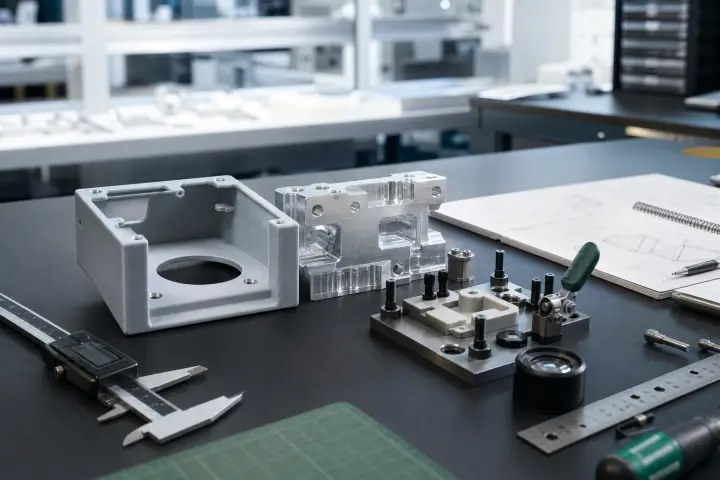
Sample route, fit checks and revision notes show what the next prototype should prove.
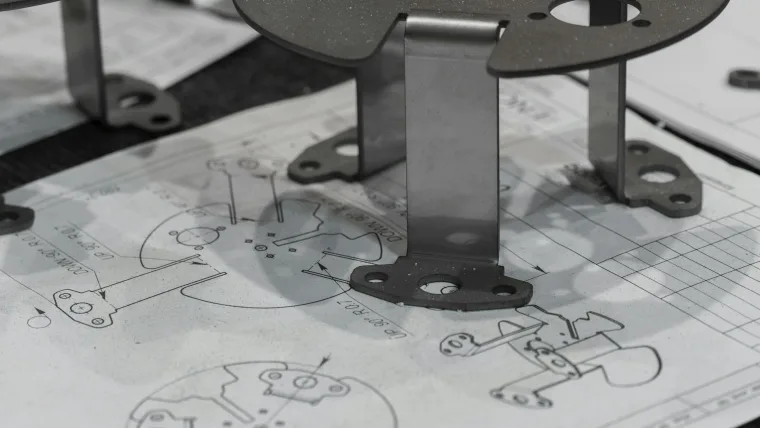
DFM notes, supplier questions and pilot gates reduce late surprises before tooling or launch.
Use the table as a project-preparation checklist before sharing files or requesting a first development path.
| Area | What to prepare | Why it matters |
|---|---|---|
| Critical dimensions | List the 5-15 dimensions where fit, function or sealing depend on precision; leave everything else at a looser, process-standard tolerance. | Focuses supplier attention on what actually matters instead of every dimension. |
| Process match | Confirm what the target process can realistically hold: CNC is typically ±0.05-0.1 mm, injection molding often ±0.1-0.3 mm, sheet metal looser still. | Prevents specifying below what the process can hold without costly secondary operations. |
| Stack-up and default block | Add up worst-case variation across mating parts, and state a default tolerance (e.g. "±0.2 mm unless noted") for uncontrolled dimensions. | Catches assembly-level misalignment and removes guesswork on the rest of the drawing. |
A short product description is enough to start. Sensitive technical, supplier and prototype files can wait until NDA terms are agreed.
Send product type, current stage, target market and the context you can safely share now.