Inputs
Product goal, target market, current files, constraints, references and timeline.
Clarify users, product requirements, constraints, cost targets and development risk before committing to detailed engineering or tooling.

A useful service page helps your team self-select before submitting a form.
Early hardware ideas, founder-led product concepts and teams preparing investor or supplier discussions.
Product goal, target market, current files, constraints, references and timeline.
Practical decisions, files and notes that move the project to the next stage.
Prototype, DFM, supplier review or production follow-through depending on risk.
The service is framed around reviewable outputs, not only meetings or styling claims.

Target user, use case, constraints, open questions and success criteria.
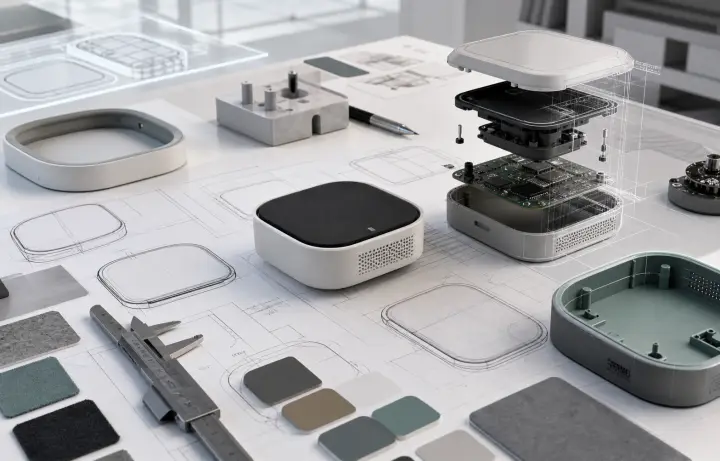
Structure, assembly intent, dimensions, exploded views and supplier-ready references.
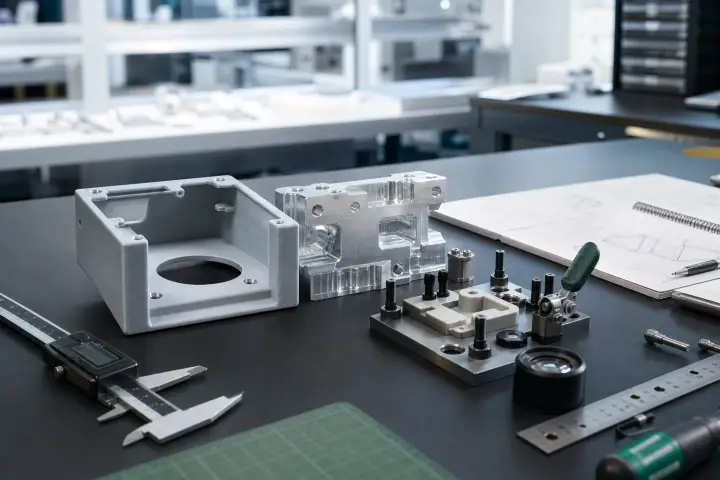
Sample method, inspection points, revision path and what the prototype must prove.
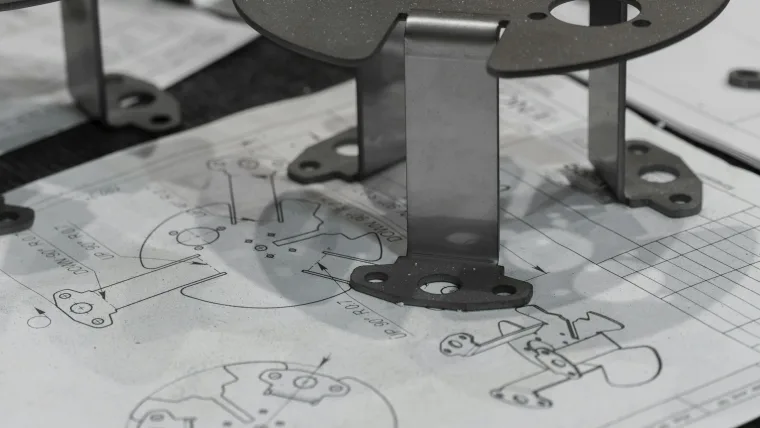
Wall, draft, material, tooling, supplier feedback and pilot approval notes.
Industrial design projects work better when scope starts with the smallest useful decision.
A focused feasibility sprint that turns rough inputs into a practical development path.
Typically 1-2 weeks after files and context are available.
Use this stage to decide whether to move into deeper engineering files, prototype, DFM or supplier follow-through.
Scope is confirmed after project review, but these are the common outputs for this stage.
The purpose is to make the next technical or commercial decision easier.
| Question | Practical output | Why it matters |
|---|---|---|
| What are we solving? | Product goal, user scenario and success criteria. | Prevents design work from drifting. |
| What is risky? | Technical, manufacturing, cost and timeline unknowns. | Protects budget before sampling or tooling. |
| What is next? | Prototype, engineering files, DFM or supplier follow-up path. | Turns design work into action. |
Physical product design needs visible gates between concept, engineering files, prototype and manufacturing.
We can review high-level context first, then sign an NDA before detailed files are shared.
Design, engineering-file and prototype decisions are checked against production constraints early.
Each stage has concrete outputs so scope, files and next decisions stay visible.
Prototype and production samples are tracked with practical QC and revision notes.