Work shown
Deliverable 01
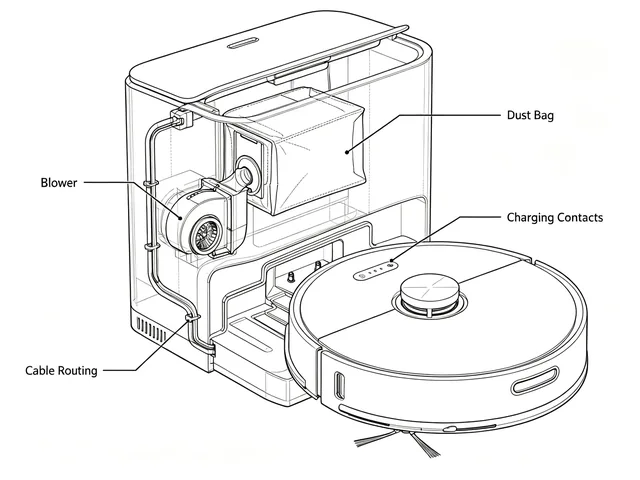
Dock architecture map for blower, dust bag, charging contacts and cable routing.
A smart home appliance team needed a charging and debris-collection dock that could hide a dust bag, blower and charging contacts while still looking at home in a living room.
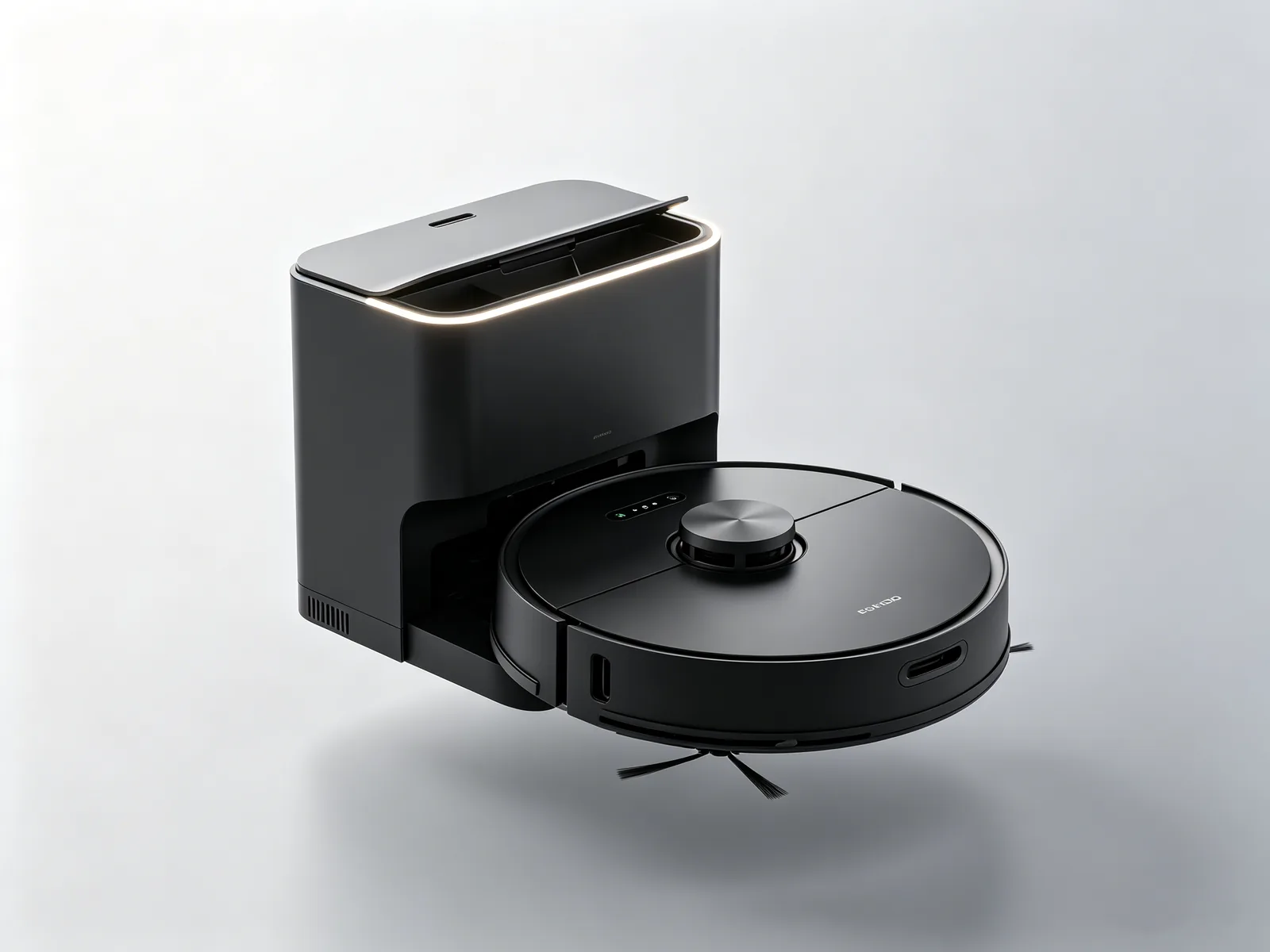
This case sits in the Smart Device & IoT Enclosures product type. Visit that page to confirm category fit before requesting a review.
Each theme maps to a common product-development decision: whether to fund engineering files, prototype, tooling, supplier sampling or pilot approval.
Smart home appliance teams need a dock that services easily but still fits into a living room, not a utility closet.
smart home appliance design, robot vacuum accessory design, charging dock enclosure design.
Blocked airflow paths, hard-to-reach dust bags, charging contact misalignment and appliance-looking bulk.
Review a smart home appliance enclosure before prototype or supplier quoting.
Use this section to understand what changed through the project before comparing visuals.
| Project stage | What happened | Why it matters |
|---|---|---|
| Challenge | The team had a working blower and dust-bag subsystem, but no enclosure direction that balanced airflow, service access and living-room presence. | Clarifies why the team could not simply approve the next spend. |
| Main concern | A dock built purely around the blower and bag geometry could end up bulky, noisy-looking or hard to service. | Shows the commercial or technical issue behind the project. |
| Approach | Align exterior form, dust-bag access panel, charging contact placement and cable routing before locking tooling. | Explains how form, structure, prototype route and supplier questions were connected. |
| Work completed | Dock architecture map for blower, dust bag, charging contacts and cable routing. Exploded view separating cosmetic shell from serviceable internals. | Makes the case more useful than a finished image alone. |
| Result | Clarified a serviceable dock layout before deeper mechanical engineering investment. Reduced the risk of blocked airflow or an unreachable dust-bag panel. | Helps similar teams judge whether the same path fits their product stage. |
A useful example should show more than a finished image: inputs, structure, prototype notes and production preparation all matter.
Dock architecture map for blower, dust bag, charging contacts and cable routing.
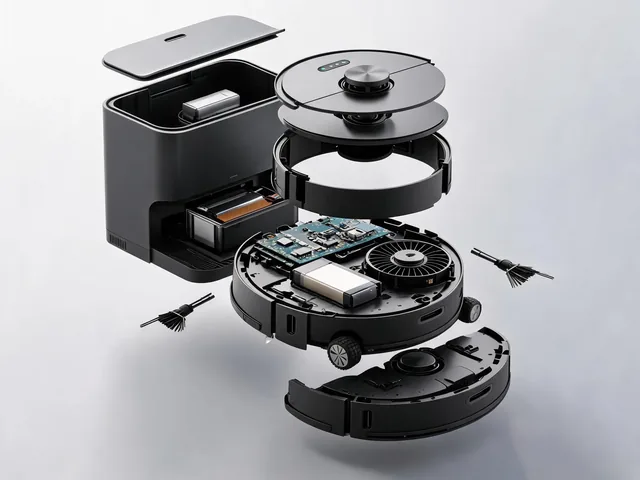
Exploded view separating cosmetic shell from serviceable internals.
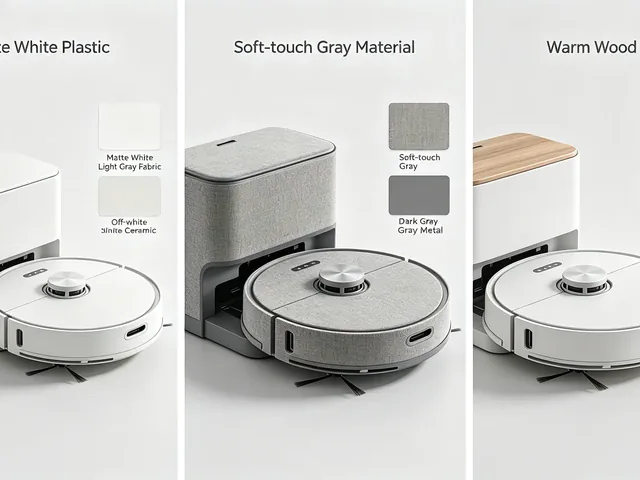
CMF direction for a low-profile, living-room-friendly appearance.
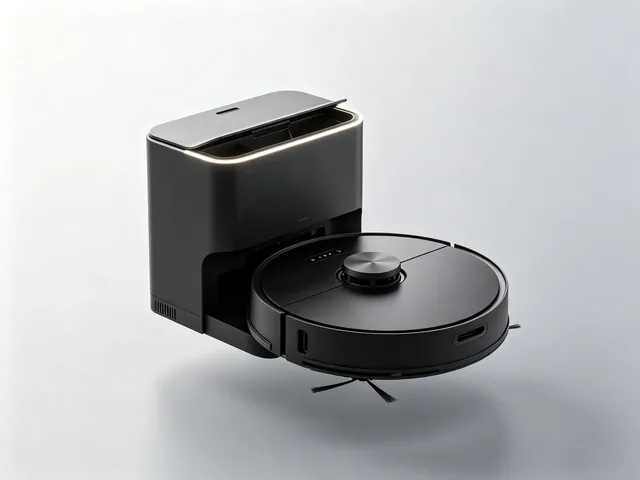
Prototype notes for airflow and dust-bag seal validation.
A useful case explains the project situation, not only the final visual.
The team had a working blower and dust-bag subsystem, but no enclosure direction that balanced airflow, service access and living-room presence.
A dock built purely around the blower and bag geometry could end up bulky, noisy-looking or hard to service.
Align exterior form, dust-bag access panel, charging contact placement and cable routing before locking tooling.
Case pages separate inputs, completed work and approval gate so your team can judge whether a similar engagement fits your stage.
Product goal, current files, target user, constraints, references and supplier or prototype context when available.
Form, structure, 3D files, prototype, DFM or supplier-review outputs tied to the decision being made.
A practical next decision: fund engineering files, build prototype, revise before tooling, ask supplier questions or approve pilot conditions.
A strong industrial design case includes visual and technical outputs across form, structure, prototype and manufacturing preparation.
These client-safe outputs show the kind of project progress you should expect.
The first review gets faster when you can share the few details that define your current stage.